

We’re sitting at the end of the year—a season when many leadership teams are deep in annual planning and shaping the strategy that will carry them through 2026. It’s a time that can feel energizing. Most people love the fresh-start feeling of a new year, the clarity of a renewed vision, the sense of possibility that comes with mapping out what’s next.
It’s also a moment where commitment really matters. And commitment almost always comes down to trust.
In The Five Dysfunctions of a Team, Lencioni talks about the relationship between healthy conflict and commitment: when people have the chance to voice their perspectives, push back, debate, and wrestle with ideas, they are far more likely to commit to the ultimate decision—even if it isn’t the exact one they personally would have chosen. Participation builds ownership.
That dynamic is powerful. But it’s not the whole story.
Because the reality of leadership is that not everyone is in the room for every decision. Some decisions—especially the big ones about strategy, people, and resources—are made by a subset of the organization. And on the flip side, each of us has also been the person receiving a decision we weren’t part of crafting.
Both roles matter. And both feel very different.
The Driver and the Passenger
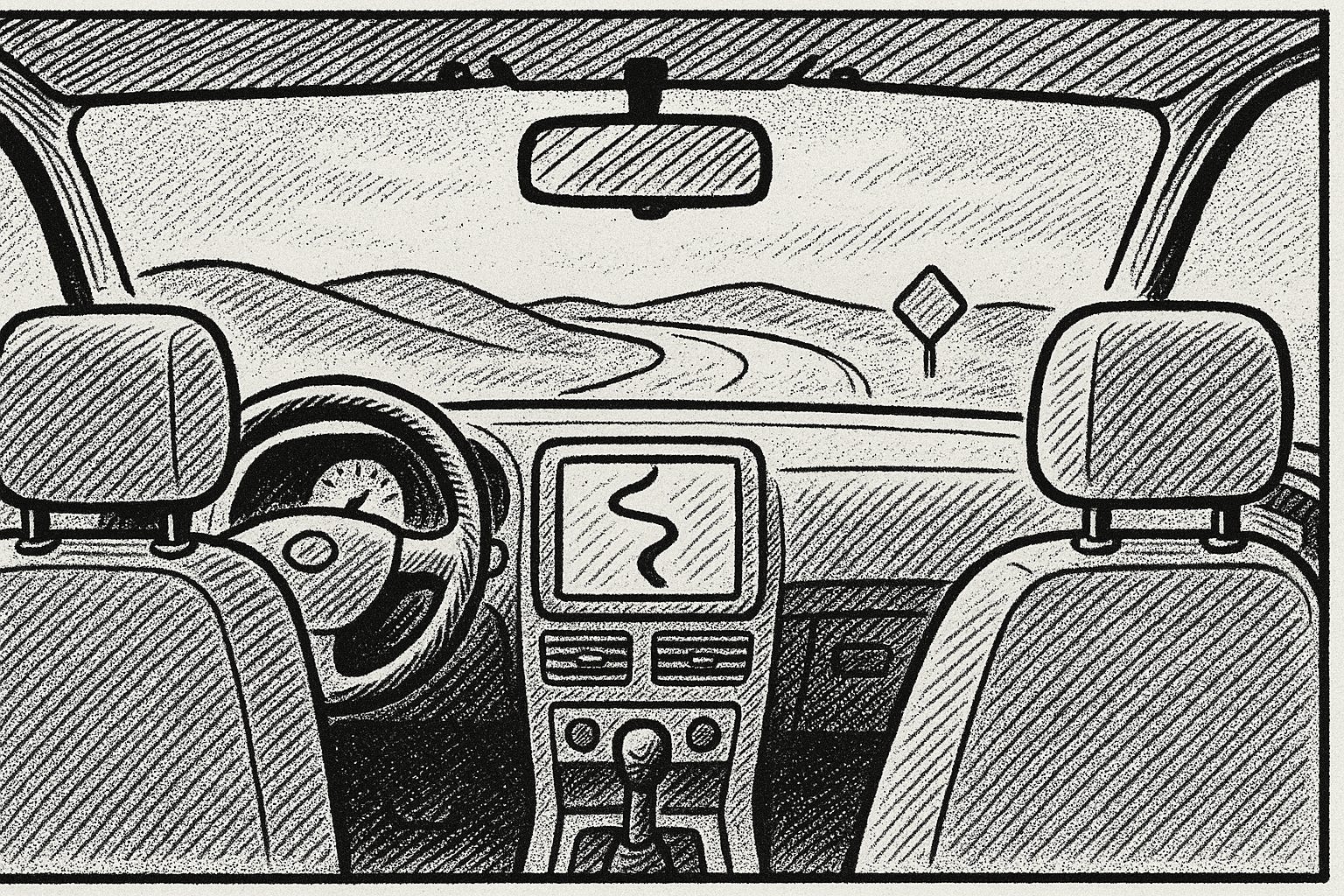
One of the most useful metaphors for this dynamic is the experience of being a driver versus a passenger.
When you’re driving the car, your tolerance for risk is naturally higher. You might speed up to make a light, take a last-second turn, choose an alternate route, or brake suddenly. None of these things feel especially alarming because you are in control. You saw the conditions. You made the judgment call. You trust your own decision-making.
But sit in the passenger seat?
Suddenly, those exact same decisions can feel very different.
A quick lane change becomes jarring. A fast turn feels unsafe. A sudden acceleration can cue a silent prayer. Why? Because you’re not steering. You don’t have access to the reasoning, the instinct, the context. You just have the experience.
And that is precisely what it feels like inside organizations.
As leaders, we can easily underestimate how much understanding we have simply because we were in the room—hearing the debate, weighing the tradeoffs, seeing the sausage get made. Even if the decision was imperfect or high-risk, we feel settled because we lived the process.
But our teams didn’t.
So when we present “the decision” without the surrounding context, what feels perfectly reasonable from the driver’s seat can feel disorienting—even unsafe—from the passenger seat.
This doesn’t make anyone dramatic, defensive, or resistant. It just makes them human.
What Teams Actually Need
Not everyone can be part of every strategic conversation. That’s not realistic, and it’s not necessary.
But what is necessary is recognizing that:
People commit more deeply when they understand how a decision was made.
Trust erodes when decisions appear out of thin air.
A team member nodding “yes” while privately carrying concerns or confusion is not truly committed.
As leaders, our job isn’t to have everyone in the room. Our job is to bring the room to them—to share enough context that the decision feels understandable and trustworthy.
Which brings me to two strategies that can dramatically shift how decisions land.
Strategy 1: Explain the How, Not Just the What
When we share a major decision with our teams, our instinct is often to jump straight to the headline: Here’s the decision. Here’s the direction. Here’s what we’re doing.
But if the goal is commitment—not just compliance—then how we arrived at the decision matters just as much as the decision itself.
You don’t need to take people through every detail. But sharing a slice of the thinking—the tensions, the tradeoffs, the disagreements that surfaced—creates a bridge between the driver’s seat and the passenger’s seat.
Even hearing something simple like:
“We debated X vs. Y pretty heavily.”
“There were strong perspectives on both sides.”
“This part of the decision wasn’t obvious at first.”
“Here’s what ultimately shifted our thinking.”
…helps people understand that the decision wasn’t made casually or in a vacuum. It shows there was conflict and there was rigor. It reinforces that the process was thoughtful—even if they weren’t in the room.
For most teams, that small window into the process does two things:
It recreates the context that gave you confidence.
It signals respect—that they deserve to know how the conclusion was reached, not just what it is.
You’re not giving a meeting recap. You’re inviting people into the experience enough that the decision feels grounded rather than abrupt.
This alone reduces the “passenger anxiety” that can show up when decisions lack context. It builds trust in the driver.
Strategy 2: Address Uncertainty
(Especially When the Stakes Are High)
Some decisions carry more uncertainty or risk. They require judgment calls that—even with solid reasoning—don’t come with guaranteed outcomes.
In those moments, one of the most disarming and trust-building things a leader can do is to acknowledge that uncertainty and share the worst-case scenario thinking that shaped the decision.
This doesn’t mean catastrophizing. It means showing that you’ve thought through the edges.
It sounds like:
“We know this is a meaningful risk.”
“Here are the indicators we’ll be watching closely.”
“If X, Y, or Z trends the wrong way, we’ll reassess.”
“These KPIs matter most in determining whether this path is working.”
“This is the best call we can make with the information we have today—and we will refine as we learn.”
This kind of transparency accomplishes something subtle but powerful:
It shows that you’re not married to being right.
You’re committed to getting it right.
Teams don’t need their leaders to pretend they have all the answers. They need to know their leaders are paying attention, willing to adjust, and clear-eyed about the risks.
Acknowledging uncertainty doesn’t erode confidence.
Pretending certainty where there is none does.
If You’re in the Passenger Seat
These strategies are just as helpful when you are the one on the receiving end of a decision.
Instead of moving immediately into debate or resistance (a very human instinct), try reverse engineering the strategies above by asking questions that can get you there:
“Can you walk me through some of the key conversations that led here?”
“What were the toughest tradeoffs the team considered?”
“What indicators will tell us whether this is working?”
“Where do you anticipate making refinements along the way?”
These questions aren’t confrontational—they’re connective. They help recreate the missing context that the driver naturally had and the passenger naturally didn’t.
And often, the tension we feel around a decision softens once we understand why the choice was made and what the team is paying attention to going forward.
Because ultimately, if we’re going to execute our organization’s strategy well, commitment matters—not blind agreement, but informed commitment. The kind that comes from understanding the why, not just hearing the what.
A Final Thought
At its core, leadership is a constant practice of perspective-taking. We move in and out of the driver’s seat and the passenger’s seat every day, sometimes without even realizing it. When we forget that those seats feel fundamentally different—one filled with context and control, the other dependent on trust—we unintentionally make the ride harder for the people beside us. But when we slow down enough to share how we arrived at a decision, or to acknowledge the risks and uncertainties we’re navigating, we create something steadier: an environment where people feel informed, included, and equipped to commit. And in seasons like this one, when the road ahead is being charted and the stakes feel high, that kind of shared understanding isn’t just helpful. It’s essential.