


It probably comes as no surprise that I deeply enjoy the beginning of a new year. I love the natural benchmark and invitation to look forward to what we want to create. I love setting new goals, and the permission the new year gives us to change our approach.
I personally don’t have a tried-and-true method for this type of annual planning. I’ve typically viewed the exercise as an opportunity to bridge the macro and the micro. What do I want to create, and how am I going to get it done?
But over the past few weeks, as I’ve been ruminating on 2026, I had a few important ahas I wanted to share.
Let’s start here:
A list of goals is not the same thing as a framework for how you want to live.
The Stacking Problem
When I look back at how I’ve approached annual planning in the past, it’s been very easy to slip into accumulation mode.
More goals.
More intentions.
More things I want to accomplish.
And again— none of that is inherently bad. But over time, it creates a stacking effect. The list gets longer. The pressure increases. And instead of feeling like I’m choosing a direction, I start to feel like I’m trying to carry everything at once.
I’m really good at trying to fit in more, and I’m realizing (at least for me) that that’s not really the right answer.
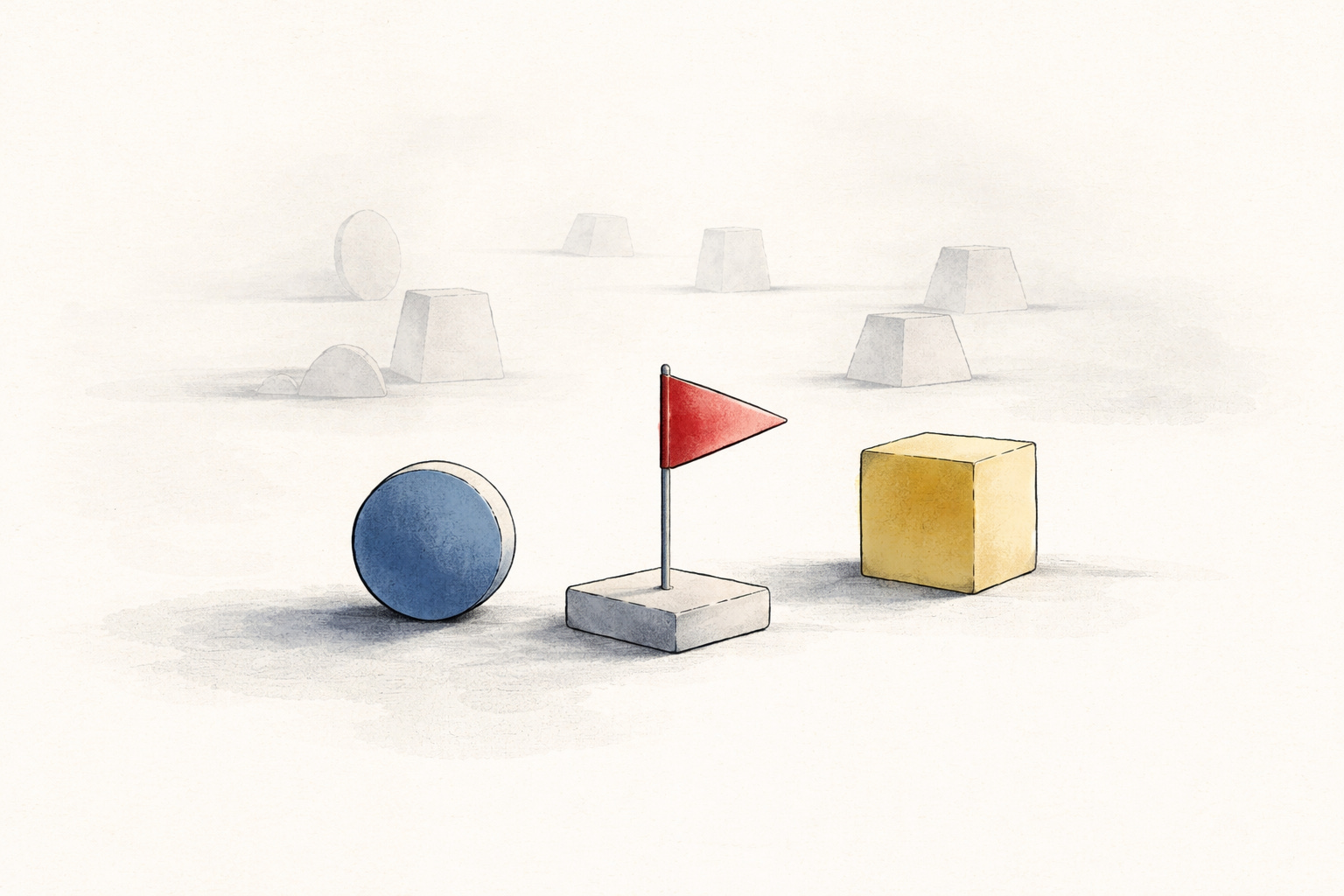
Clarity and direction aren’t just about identifying what’s important to us, but it’s also about identifying what doesn’t fit.
Choosing The Few That Matter Most
Let’s start with the first half of that sentiment. We need to identify what’s important to us. And remember, if everything is important, nothing is important. In past years, I’ve gone down the rabbit hole of creating goals for every single part of my life. Not this year.
One shift that’s been especially helpful for me is forcing myself to answer a much harder question:
What are my biggest priorities of the year?
Not ten. Not everything that sounds appealing.
But three.
Where are the three places that, if I put my energy, attention, and discipline, I would feel proud of where I landed by the end of the year?
This question immediately changes the nature of goal-setting. It moves us away from “what do I want to do?” and toward “what is my priority?”
Maybe it’s:
Health & well-being
Finances
Career
Spirituality & inner life
Family
Partnerships
Community & socializing
Home & environment
Creativity & expression
Fun, joy & adventure
Learning & growth
Identity & self-definition
Rest & recovery
Structure & stability
Which three stand out to you?
Naming What Doesn’t Fit (For Now)
Once we identify our priorities, there’s an uncomfortable but necessary follow-up:
What doesn’t fit in this season of my life?
This doesn’t mean those things aren’t valuable.
It doesn’t mean you don’t care about them. It’s not even to say that you won’t make progress in those areas in some capacity. But, in the hierarchy of importance for you right now, they’re receding into the background.
Not asking myself this question is where I’ve struggled in the past. I try to make progress everywhere, and it actually leads to more stress and a lack of clarity.
This year it’s been invaluable for me to explicitly call out the things that aren’t getting as much of my time, energy, and resources this year.
This could look like:
If health and saving money are major priorities, frequent travel may not make sense. It disrupts routines and adds expense.
If career and travel are front-and-center, maybe this isn’t the year invest a ton of time or energy in updating your home.
If family and inner life are your focus, maybe career acceleration or weekends packed with social plans don’t fit as well.
The goal here isn’t deprivation — it’s alignment.
There is something powerful about consciously naming the things you may love, enjoy, or want later but choose not to prioritize right now. It reduces internal friction and helps us stop negotiating with ourselves every time an opportunity arises.
From Priorities to Decisions
The final — and most practical — piece of this framework is learning to use priorities as a decision-making tool.
It’s one thing to say, “Health is important to me this year.”
It’s another to regularly ask:
Is this choice supporting my health?
Is this commitment aligned with my financial goals?
Does this actually serve the community I’m trying to build?
Is this decision pulling me closer to, or further from, what I said matters most?
When priorities become questions we return to — not just statements we write down — they start to shape both big decisions and small ones.
They become guardrails.
And over time, those small, aligned decisions add up to something much more meaningful than a completed checklist.
A Different Way Forward
For me, this shift has moved goal-setting from a performance exercise to a values-driven one.
Instead of asking, “What do I want to accomplish this year?”
I’m asking, “What kind of life am I building — and what needs to wait so I can build it well?”
That question feels steadier.
More honest.
And far more sustainable.
If you’re reflecting right now, my invitation is simple:
Don’t just name what matters.
Name what doesn’t fit — and then practice choosing accordingly.
Looking to reflect more deeply on 2025? Check out our latest post:
A Year, Considered

I’m a self-diagnosed future-tripper. I love imagining what could happen months or even years down the road. This time of year, especially, it’s easy to start dreaming and strategizing about 2026.