

The Moment It Clicked
Last November, I had an honest moment with myself.
It had finally dawned on me that my screen time had gotten out of control. I was averaging over six hours a day on my phone, and I remember thinking, how is this even happening?
It wasn’t intentional. It just crept. A little more here, a little more there. And then, all of a sudden, I paused—this is not thoughtful, and it’s definitely not sustainable.
I don’t think this is a groundbreaking realization. Phones just suck you in. They trap you. Half the time you don’t even realize it’s happening.
For me, this started as a productivity decision. I have a lot I’m trying to get accomplished. I have a lot of work I want to do. And spending over six hours a day on my phone just didn’t align with that.
So I started making changes.
What Changed
I didn’t do one dramatic thing. I did a lot of small, practical things.
I rewired parts of my day. I built new habits. I conditioned myself to stay off my phone instead of defaulting to it.
Last week, my average screen time was one hour and one minute a day.
I’m genuinely proud of that. And it’s not surprising to me that January felt like one of my most productive months in a long time. I’m getting a lot done. The productivity payoff has been real.
But what surprised me is that productivity hasn’t been the biggest benefit.
The Bigger Payoff: Awareness
The biggest payoff has been awareness.
I talk a lot in the Elevate program about mindfulness versus mindlessness. And when I say mindfulness, I don’t mean sitting cross-legged for twenty minutes every morning if that’s not realistic for you.
Meditations are great. They’ve worked for me, and I love them. But to me, mindfulness is about practicality.
It’s about:
how I’m showing up in my day
whether I’m aware of how I’m thinking and feeling
whether I’m choosing my responses or just reacting
Mindlessness is going through the motions without being present.
Looking back, unconsciously picking up my phone and scrolling was the clearest example of that for me. I wasn’t choosing it. I wasn’t enjoying it. It was just… happening.
Being more analog has given me white space. And that white space has changed how conscious I am of myself.
What That Looks Like In Real Life
Last Friday, I wrote about catching myself in “problem mode” and walking myself out of it.
What I didn’t fully spell out is that this whole internal conversation happened while I was walking in the park.
Normally, I would’ve thrown on a podcast and kept moving. I actually did at first. Then I caught myself and switched to a guided meditation instead.
On the back end of that meditation, I started reflecting. Coaching myself. Shifting my energy.
I ended that walk more aligned, more energized, and clearer than when I started.
That shift happened because I didn’t immediately fill the space.
If I had stayed plugged in — if I had just kept consuming — I don’t think I would’ve had access to the tools. The white space is what created room for awareness.
This feels like a perfect example of what it looks like to bring mindfulness into my day. At the same time, I’ve also put some very real strategies in place to bring my screen time down and my awareness up.
What I Actually Did to Reduce My Screen Time
A few people have asked how I did this, so here’s what worked for me:
Turned Do Not Disturb on almost all the time
I don’t need notifications constantly pulling my attention. If something’s urgent, the people in my life know they need to call twice to get through. For everything else, I’ll see it when I see it. Most things are really not that urgent.A real clock in my living room
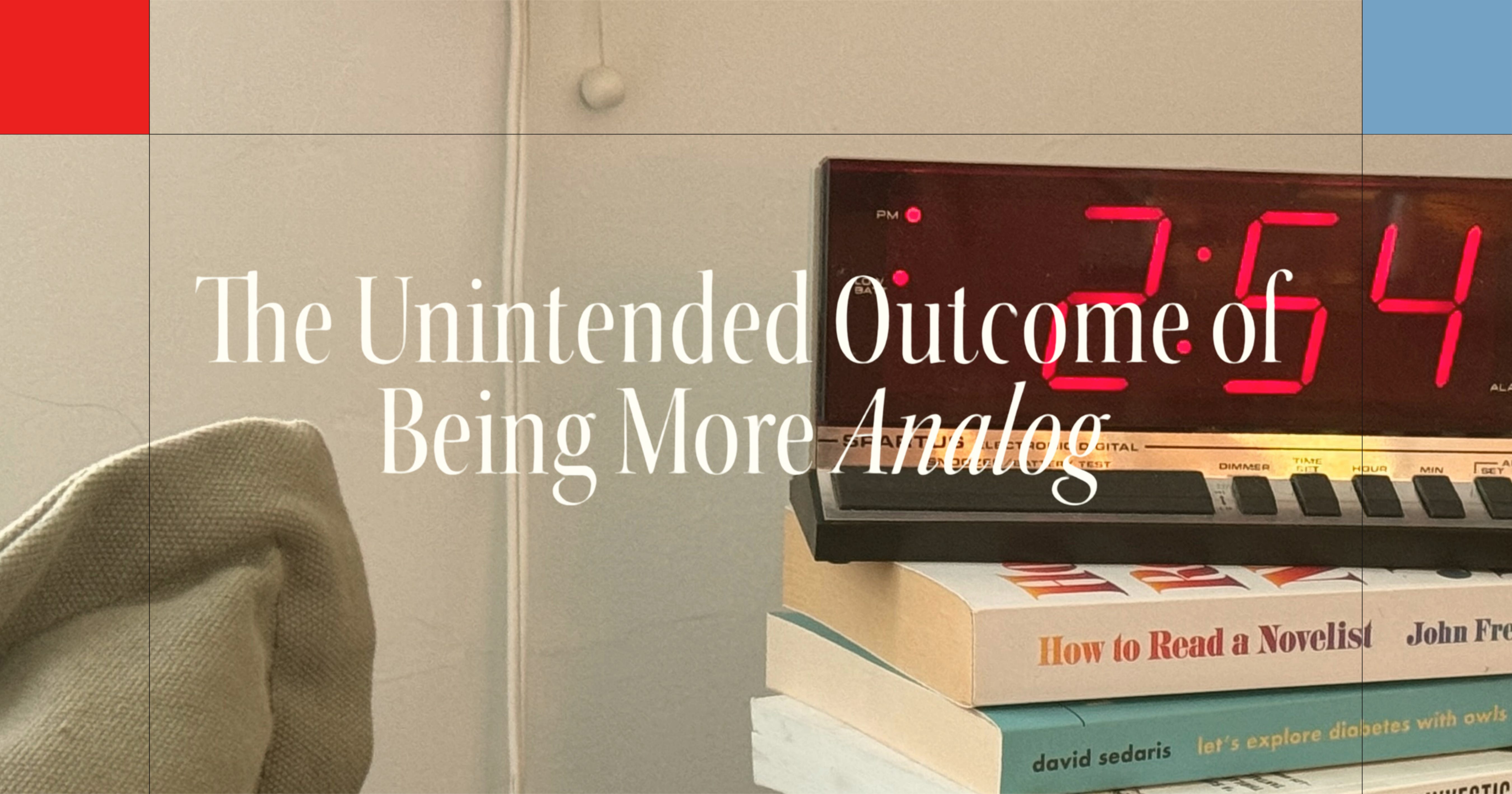
My apartment is shockingly void of clocks. Not a single one on any kitchen appliance. Which means, I was grabbing my phone just to check the time— and then getting pulled into everything else. One large digital clock purchase later and I solved for that.A Physical Kitchen Timer
For cooking, using the Pomodoro technique, anything. One less reason to pick up my phone.My Phone Lives in the Kitchen at Night
Around 8–8:30 p.m., it’s plugged in and done for the day. I have an alarm clock in my bedroom, so really, there’s no reason to have my phone bedside.A Fitness Tracker Instead of My Phone
I’m no longer tethered to my phone just to track activity.Hard limits on Instagram
Instagram was my biggest time suck. It was so easy to go on my phone for any of the above reasons and then end up on Instagram. So, I instituted an app blocker. I can’t go on for more than 10 minutes at a time. And at this point, I’m down to checking it once a day with intentionality. I watch the latest videos of my nephew, check my messages from friends and then I’m out. Usually, I don’t even make it 10 minutes.
None of this is about rejecting technology. It’s about not letting it run me.
The Punchline
I’ve been thinking a lot about technology lately — how it fits into our lives, our work, and how what we’re doing at Cohd is more relevant than ever because of technology. (There’s more I’ll be writing about on that front.)
But at a very personal level, this is what being more analog has taught me:
I want technology to be something I use on purpose, not something I default to unconsciously.
Used mindfully, technology is an incredible tool.
Used mindlessly, it quietly erodes our attention, awareness, and presence.
This shift hasn’t been about less technology.
It’s been about more intention.
And that — more than anything — has changed how I move through my days and show up for myself.