

On Tuesday, I wrote about reducing my screen time from over six hours a day to just one. It began as a productivity experiment. I wanted to see what would happen if I removed the reflexive phone use—the unconscious scrolling and constant checking that had quietly become background noise in my day. I assumed I’d gain focus and time.
What I didn’t anticipate was that the most meaningful shift wouldn’t be efficiency.
It would be mindfulness.
That theme continued to surface throughout the week. In 1:1 check-ins and in team practices, people described moments where they caught themselves in real time. Someone noticed their energy spike in a meeting. Someone else realized they were reacting instead of responding. One participant shared, “I feel this frantic energy, but I’m not exactly sure how to address it, and I don’t want it impacting my team.”
Of course, we talked about tools or strategies, but I also thought it was really important to acknowledge that noticing is a win in and of itself.
So many of us move through our days like fish in water. We don’t question the environment because it feels constant. Frantic becomes normal. Distraction becomes baseline. We don’t notice or question the low-level tension we’re operating with.
Mindfulness vs. Mindlessness
When people hear “mindfulness,” they often think meditation. I personally love meditation, and I think it can be really transformative. But after nearly a decade of teaching and practicing this work, I’ve come to see that mindfulness doesn’t have to look like a formal practice.
There isn’t one right format.
For me, mindfulness is simply the opposite of mindlessness. Mindlessness is when we are physically doing one thing while mentally doing several others. We brush our teeth while mentally running through the day. We eat lunch while responding to emails. We walk while layering in podcasts, messages, and planning for what’s next.
Planning and reflecting are useful. The issue isn’t thinking ahead; it’s the lack of intention. We default to being out of the moment without choosing it.
That was the core realization behind my screen time shift. I wasn’t consciously deciding to pick up my phone most of the time. It was reflexive. Automatic. Unexamined. That pattern wasn’t just about time lost—it was about awareness lost.
When I interrupted that reflex, I didn’t just gain hours. I gained space. Mental space. Emotional space. The ability to notice what was actually happening internally instead of constantly buffering it with input.
The Power of Noticing
What I’ve seen repeatedly this week is that noticing is often the hardest part—and the most important part.
When you pause long enough to ask, “How am I actually feeling right now?” you interrupt autopilot. You create a moment of choice. You may not immediately solve the tension or anxiety, but you are no longer unconsciously operating inside it.
That’s where agency begins.
Without noticing, we normalize everything. With noticing, we regain authorship.
Making Mindfulness Practical
One of the reasons I like defining mindfulness as “noticing” or “presence” is that it makes it incredibly accessible. It removes the pressure to overhaul your routine or adopt something intensive.
You can practice mindfulness inside the life you already have.
Pick one activity you do every day—brushing your teeth, eating lunch, walking the dog, driving to work—and choose to do it with intention.
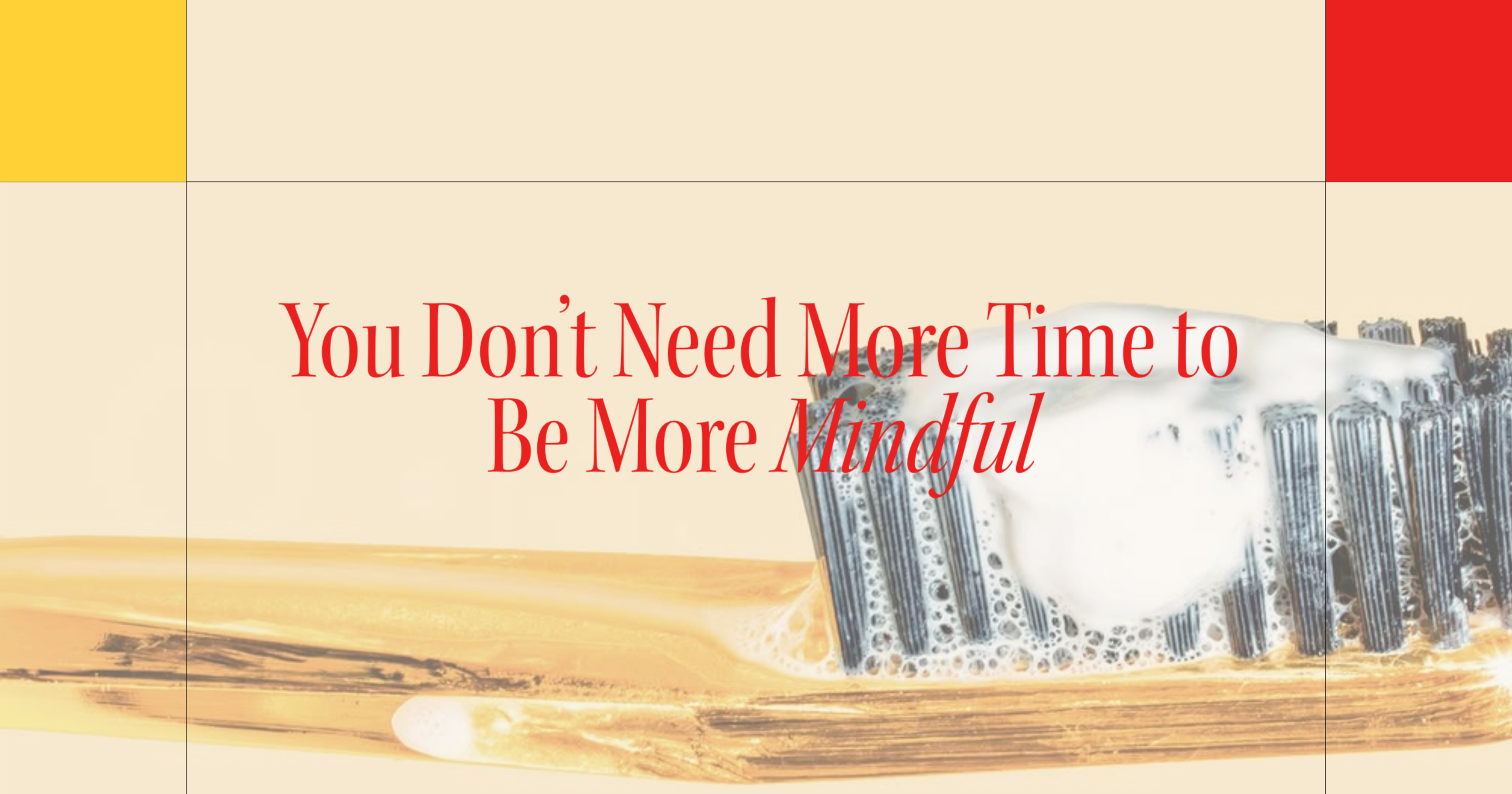
Mindless brushing looks like mentally drafting emails while your body goes through the motions. Mindful brushing means paying attention to the sensation, being physically present for those two minutes.
Mindless eating looks like working through your lunch at your desk, barely tasting it. Mindful eating might mean sitting at a table without your laptop and actually noticing what you’re consuming.
Mindless walking often includes layering in constant stimulation. Mindful walking could mean removing those inputs and simply noticing your feet hitting the ground.
This is not about being mindful all the time. That’s unrealistic and unnecessary. It’s about building the muscle by interrupting mindlessness.
Just once is enough to start.
Why This Matters Now
We live in a time when speed is rewarded and constant input is normalized.
Technology makes it easy to stay perpetually stimulated and perpetually distracted.
Entire days can pass in reaction mode—moving from one task, message, or conversation to the next without ever checking in internally.
Mindfulness, in its most grounded form, is the ability to return to the present moment and recognize your internal state. It often requires slowing down, which can feel uncomfortable precisely because we’re so accustomed to operating at a steady hum of activity.
But that discomfort is instructive. It reveals how rarely we sit with ourselves without distraction.
Reducing my screen time wasn’t powerful because it optimized productivity. It was powerful because it broke a reflex and forced awareness. It shifted me from reacting to choosing.
In a culture that keeps accelerating, the ability to notice your energy, your emotions, and your patterns is not optional. It’s foundational. It’s what allows you to respond intentionally instead of being carried by default.
In Practice This Week
Instead of adding something new, choose one small moment to do differently. Pick one daily activity and do it without layering in additional input. Or pause once a day and ask yourself, without judgment, “How am I actually feeling right now?”
You don’t have to fix the answer.
Just notice.
That’s where change begins.